

Defense against False Claims Act violations, qui tam whistleblower actions and parallel
criminal fraud charges in Arizona.

30+ Years Federal Defense
A former employee or business partner filed a qui tam lawsuit and now the federal government has joined the case against you. False Claims Act cases are devastating because the financial exposure is enormous. The government can seek triple damages plus penalties of over $11,000 per false claim submitted. If you had a government contract and someone alleges you overbilled or didn’t deliver what you promised your entire business is at stake.
I defend companies and individuals against False Claims Act allegations. I know how to challenge the relator’s credibility and I know how to negotiate with DOJ attorneys to minimize your exposure. These cases often settle but only if you have aggressive representation pushing back.
The False Claims Act imposes liability on any person who knowingly submits, or causes to be submitted, a false or fraudulent claim to the federal government. While the FCA is primarily known for its civil provisions, which allow for treble damages and significant per-claim penalties, the federal government frequently pursues parallel criminal proceedings under 18 U.S.C. § 287 (Criminal False Claims) and 18 U.S.C. § 1347 (Health Care Fraud), among other statutes.
Under 31 U.S.C. § 3729(a)(1), liability attaches to any person who:
Knowingly presents, or causes to be presented, a false or fraudulent claim for payment or approval;
Knowingly makes, uses or causes to be made or used, a false record or statement material to a false or fraudulent claim;
Conspires to commit a violation of the FCA; or
Knowingly makes, uses or causes to be made or used, a false record or statement material to an obligation to pay or transmit money or property to the Government, or knowingly conceals or knowingly and improperly avoids or decreases an obligation to pay or transmit money or property to the Government (known as a “reverse false claim”).
**The Knowledge Requirement (Scienter)** A critical element of the FCA is the “knowing” requirement. The statute defines “knowing” and “knowingly” to mean that a person:
Has actual knowledge of the information;
In federal criminal cases, judges are required to consult the United States Sentencing Guidelines (U.S.S.G.) when determining an appropriate sentence. While the Guidelines are advisory following the Supreme Court’s decision in *United States v. Booker*, they remain the starting point and anchor for all federal sentencings.
Criminal convictions related to false claims are typically sentenced under U.S.S.G. § 2B1.1, which governs offenses involving fraud and deceit.
The **Base Offense Level** for most fraud offenses under § 2B1.1 is 6 (or 7 if the statutory maximum term of imprisonment is 20 years or more).
The most significant driver of the final offense level is the **Loss Amount** under § 2B1.1(b)(1). The Guidelines dictate substantial increases to the offense level based on the financial loss suffered by the government. For example, a loss of more than $150,000 adds 10 levels, while a loss exceeding $1.5 million adds 16 levels. The court will consider both the “actual loss” (the amount actually paid out by the government) and the “intended loss” (the amount the defendant sought to obtain), using whichever is greater.
Several specific offense characteristics can further increase the defendant’s sentencing exposure:
The Department of Justice has consistently prioritized the enforcement of the False Claims Act, viewing it as the most effective weapon against corporate fraud. In recent fiscal years, the DOJ has recovered billions of dollars annually through FCA settlements and judgments, with a significant portion stemming from the healthcare and defense procurement sectors [2].
The DOJ frequently utilizes data analytics to identify anomalous billing patterns, allowing investigators to target providers whose claims significantly deviate from their peers.
The United States Attorney’s Office for the District of Arizona (USAO-AZ), which operates divisions in Phoenix and Tucson, is highly active in prosecuting federal fraud cases. The District of Arizona presents unique enforcement dynamics due to its large healthcare sector, significant defense contracting presence, and proximity to the border.
Federal investigations into False Claims Act violations are typically exhaustive, resource-intensive, and highly secretive in their early stages.
Investigations are most commonly triggered by:
Investigations are typically spearheaded by the FBI, in conjunction with specialized agencies such as HHS-OIG (for healthcare), the Defense Criminal Investigative Service (DCIS), or the IRS Criminal Investigation Division (IRS-CI).
The investigation process often involves:
False Claims Act violations typically arise from specific, recurring scenarios across various industries.
Defending against False Claims Act allegations requires a proactive, multi-faceted approach. Experienced federal defense attorneys employ several strategies to defeat or mitigate these charges.
The collateral consequences of a False Claims Act investigation or conviction are often as devastating as the statutory penalties.
A: A *qui tam* lawsuit is a civil action brought by a private citizen (a “relator” or whistleblower) on behalf of the federal government, alleging violations of the False Claims Act. These lawsuits are filed under seal, meaning you will not know about them while the DOJ investigates. If the government intervenes and recovers money, the whistleblower can receive between 15% and 25% of the recovery. If you suspect an employee is gathering documents or acting unusually, you should consult counsel immediately.
A: No. The False Claims Act requires that the false claim be submitted “knowingly,” which includes deliberate ignorance or reckless disregard. Innocent mistakes, clerical errors, or negligence do not violate the FCA. However, if the government believes your “mistakes” were intentional or the result of a systemic failure to implement compliance protocols, they may pursue criminal charges under 18 U.S.C. § 287, which carries up to five years in prison per count.
A: Do not interfere with the search, but do not consent to any expansion of the warrant’s scope. Ask for a copy of the warrant and the lead agent’s business card. Most importantly, **do not answer any questions** or attempt to explain the situation to the agents. State clearly that you wish to speak with your attorney, and contact a federal criminal defense lawyer immediately. Send non-essential employees home to prevent them from being interviewed without counsel present.
A: A CID is a powerful discovery tool used by the DOJ to obtain documents, written answers to interrogatories, and oral testimony during a False Claims Act investigation. Receiving a CID means you or your company are under investigation. You must not destroy any documents after receiving a CID, as this constitutes obstruction of justice. You need an attorney to negotiate the scope of the CID and manage the production of documents.
A: The government calculates its “actual damages” (the amount it paid out due to the false claims) and then multiplies that figure by three (treble damages). In addition, the court assesses a mandatory civil penalty for each individual false claim submitted. Because healthcare providers and contractors often submit thousands of claims, the total financial exposure can be astronomical, often exceeding the net worth of the company.
A: In many cases, yes. Corporate bylaws or employment agreements often contain indemnification clauses that require the company to advance legal fees for officers, directors or employees facing investigations related to their job duties. However, if the company is also under investigation, you will likely need separate, independent counsel to avoid conflicts of interest.
A: Yes. Many civil False Claims Act cases are resolved through settlement agreements where the defendant agrees to pay a negotiated sum and enter into a Corporate Integrity Agreement (CIA) without formally admitting liability. This allows the business to continue operating and avoids the risk of a catastrophic trial verdict. However, negotiating these settlements requires skilled legal representation to protect against parallel criminal charges. — ### References [1] Law Offices of Paul D. Scott. “Fundamentals of the False Claims Act.” https://lopds.com/fundamentals-of-the-false-claims-act/ [2] U.S. Department of Justice. “False Claims Act Settlements and Judgments Exceed $6.8B in Fiscal Year 2025.” https://www.justice.gov/opa/pr/false-claims-act-settlements-and-judgments-exceed-68b-fiscal-year-2025 [3] U.S. Department of Justice. “Wound Graft Company Owners Sentenced for $1.2B Health Care Fraud.” https://www.justice.gov/opa/pr/wound-graft-company-owners-sentenced-12b-health-care-fraud-and-agree-pay-309m-resolve-civil
Facing federal charges? Call now for a free, confidential consultation with an experienced federal defense attorney who has handled these cases for over 30 years.
Available 24/7 — Nights & Weekends
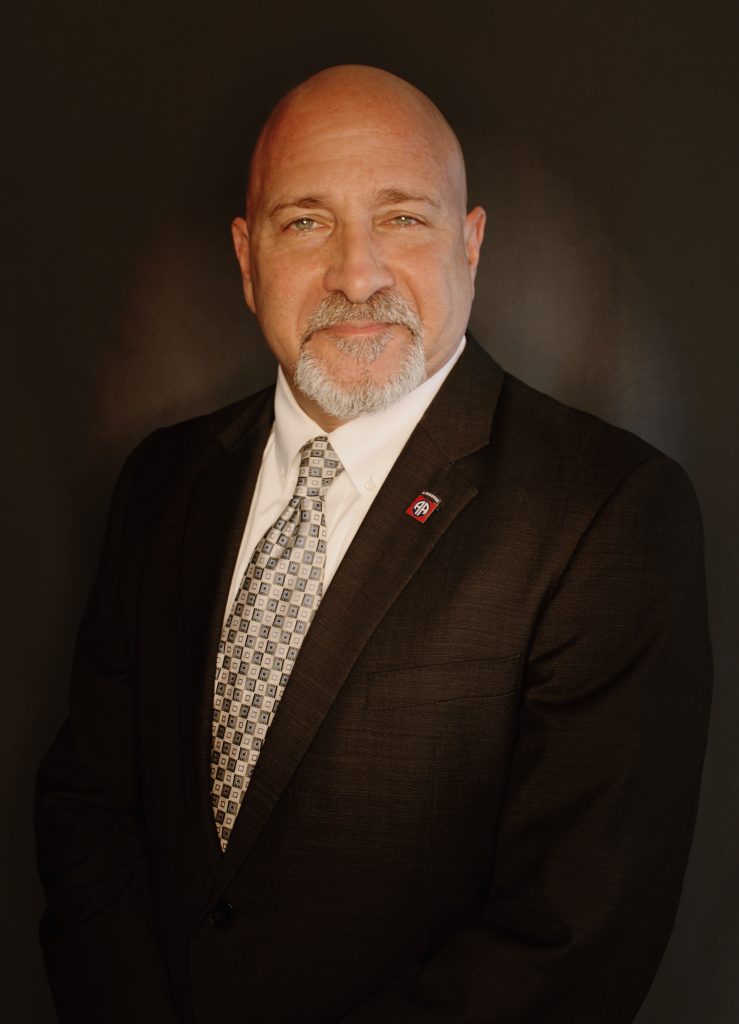
30+ Years Federal Defense Experience
U.S. Army Veteran (82nd Airborne)
Time is critical when facing federal charges. Every day without experienced counsel is a
day the government uses to build its case against you. Contact Myles A. Schneider today
for a free, confidential consultation.
Available 24/7 – Free consultation for all federal criminal matters
This site is for informational purposes only. Not legal advice.
Website crafted by Minnesota Legal Website Design & SEO
